|
||||||||||||||||||||||||||||||||||||||||||||
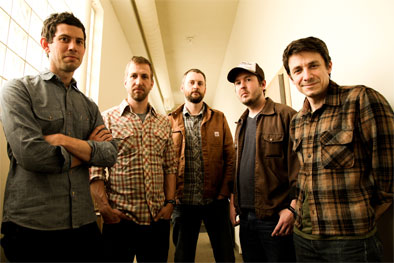
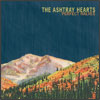
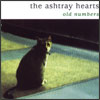
The Ashtray Hearts are five-piece ensemble based out of Minneapolis that play what is best described as apartment music. The group takes elements of Americana, folk, country and other influences to create their lonely, broken-hearted sound. In early 2013, the Ashtray Hearts will release their third long-player, “The Strangest Light.” The album is the follow-up to 2005’s acclaimed “Perfect Halves.” Though the time between records was long due to members living continents apart, the final result captures some of the band’s best work. Twelve new songs about loss and love and hope. From the liner notes of Perfect Halves:The questions that the Ashtray Hearts’ music has asked in the past, of who is being abandoned and who is doing the abandoning, who makes up the left and the leaving, are being answered on the band’s second full-length release, Perfect Halves. Their debut, Old Numbers (Free Election elect003), culled together slowed-down and somber songs dwelling on loves lost, futures resigned, bleak hope, broken hearts. As Amy Carlson noted in No Depression, “Backing up the gorgeous melancholy found in the words are sounds that loom and linger with a warm intensity, tugging tightly at the heartstrings.” Now, while faiths are still-- being tested within the songs presented here, along with the heartbreak, we hear a louder and lusher heartbeat, and if we’re not yet fully finding that hope, then at least we’re looking. The beginnings of the band emerged four years ago, when Dan Richmond (vocals, acoustic guitar) started working on some old songs with some old friends, playing together in the living room of Steve Yernberg (guitar, banjo, keyboards, vocals) and Brad Augustine (accordion, keyboards), overlooking 35th Street in Minneapolis. The trio soon asked Ryan Huber Scheife (bass) and John Jerry (drums) to join them on bass and drums, respectively, and add some depth to the sound they were finding, and the group then added the final piece when it found that Aaron Schmidt (trumpet, vocals, keyboards) made for a perfect fit on horn and harmonies. The six-piece already had long histories: Richmond and Scheife went to high school together outside Milwaukee; Yernberg and Schmidt, from a small town in northeast Wisconsin, were lifelong friends and former roommates, and all six had come to the Twin Cities to attend various institutions of higher learning. The band found an early stage home in the basement Clown Lounge in St. Paul. Upstairs, the Turf Club soon became a regular host to the music series Heartbreak & Harmony, in which Richmond collaborates with “Cowboy” Dave Campbell of Twin Cities band Accident Clearinghouse to showcase alt-country, Americana, folk, roots, and any like-minded souls who create music that may fall somewhere in between. The Ashtray Hearts, whose music definitely falls in that in-between, describe their sound simply as “apartment music,” as it can be made and played in rented rooms. A couple of the songs on this new record, “New York” and “Perfect Halves,” hail from the band’s formative period, having been set aside and picked up and revised over the years. “Valentine” ended every set of the Hearts’ tour of summer 2002 through the Midwest, over the Rockies, and up and down the West Coast. Certain others, such as “Where You Sleep,” “English,” and “On the Wires,” were honed while playing back-to-back-to-back shows—twelve in twelve days—through England and Scotland. The success of this trip owed a large debt to legendary BBC Radio 2 deejay Bob Harris’s featuring the band and having them in the London studio for an interview and a couple of stripped-down quick ones on the day after the tour’s opening show. With this material in hand, last winter the Hearts crept up to Duluth, at the southwest crevice of Lake Superior, where the freeway ends and where Highway 61 gets revisited. (The interstate offers chain motels and exit signs; the old road, Highway 61, offers the kind of true Americana that only an authentic American back road, ultimately meandering to the delta of the Mississippi, can guarantee.) The boys were up there in the North Country working weekends at the Sacred Heart Recording Studio, working out the sound of the record and working on beards to combat the big lake’s bitter chill. The studio makes its home in a brownstone cathedral built in 1896, complete with stained glass, wooden balconies, and a pipe organ crafted even before the walls of the church were. The drum kit was set up in front of the carved marble altar. The change of scenery, grand atmosphere and acoustics of the cathedral, late nights, analog equipment, hotel rooms, and local bars made for productive sessions and inspired the band to deepen the already very rich texture of its sound. After taking the summer of 2004 off, however, Richmond and the rest of the Hearts knew the record wasn’t done. Logging only a single full-band practice between April and October, they were able to step back from the creation of the record and try to get a feel for what was needed and see how it would all shake out. (The members were hardly strangers, though, during that stretch, as it turned out in many ways to be another typical Twin Cities summer spent among close friends, one in which backyard cookouts, softball games, and camping trips featured heavily. But the summer and fall held milestone moments as well, and by the time all six were together in their practice space in Schmidt’s basement again, Scheife was a new father, Richmond had just gotten married, John Jerry had finished a tour with the Owls and returned from visiting his girlfriend in Denmark, Yernberg was looking to buy a house, and Augustine was contemplating leaving town for New York City.) In the late fall, the band finally brought the album home to Third Ear Recording Studio, near the grain elevators on the Mississippi River in Minneapolis, to rework a couple of tracks, add a new one, and remix the entire slate. These are the songs: “Rules,” the opener, is the newest song in the group. Augustine’s bold, simple Wurlitzer bars at the start, and their replacement by the ghostly Chamblerlain organ, which uses tape loops of other instruments, makes you think this record will be another beautiful and subtle assembly of wounded songs. But Yernberg’s searing guitar at the halfway point makes it clear that this set at times will bleed a little more on the edges. Nowhere on this album is the urgency of Richmond’s new cast of characters better exemplified musically than by the freight-train-engine chugging of John Jerry’s brushes against the snare in “On the Wires.” Yernberg’s turn on the banjo adds yet another instrument to the mix, and another layer of freshness and vitality that weaves together with the electric and acoustic pickwork and contrasts splendidly with Schmidt’s clear, bright trumpet calls. The song’s deliberately vague central image of leaving a ticket lying at your feet is arresting, but the tone of the song suggests that the repeated declaration that it’s too late is more a challenge than an admission of defeat. Augustine’s accordion, bought on a whim during the band’s nascent stages, wheezes wonderfully in “Exits” as it begins to build the song’s texture and provides breathing space between lyrical snapshots. Then comes the majestic entrance of the Hammond organ, another ideal complement to the Hearts’ sound. The signature rotating tone builds gloriously to quickly lift the peak of this song to a climactic and moving musical and emotional moment. “English,” the fourth track, is anchored by all of the earthy weight that the cavernous cathedral ceilings of Sacred Heart could pull out of Schmidt’s trumpet. The lyrics stem from Richmond’s time in Ireland, where he worked in a bar and stayed just long enough to leave. But he formed relationships there that would linger with him and inspire several songs he wrote while abroad, having continued to London before returning home. The tragic and elegiac title track, “Perfect Halves,” shows us a narrator looking backward and forward at the same time, as if an anticipated breaking point has finally come. We’re splitting apart from the past, but we’ll keep in touch. When the solid final notes sound, they close Side 1 of the album order. Flip the record. “New York,” then, opens the second half of the record. This song, revisited since gracing the B-side of the band’s first official release, the “Country Bar” seven-inch single (Free Election elect001), features a haunting opening followed by an instrumental coda that rings out before gradually fading. “Long Enough” crashes open with a wave of sound, which ebbs to let in the subdued verse before flowing again at loud and powerful choruses. The Hammond again alternately ripples and soars, and considered alongside the other new sounds in the opening number and elsewhere, its inclusion in the studio makes an outstanding argument for the Hearts to haul one of the various cast-off organs floating in the band members’ possession onto a large-enough stage some night. In fact, this seems like a necessity. Another gritty, vibrant solo by Yernberg on the next number, “Valentine,” stands in defiant contrast to the delicate phrasings he lays below the surface of this and other songs’ verses. The solid rhythm of John Jerry’s drumming also propels the song, which fully faces the future while at the same time evoking a sense of nostalgia for the present. Play this one when you find yourself driving alone on a near-and-dear back road. Scheife’s sturdy bass eases the lullaby “Where You Sleep” along, and while his playing pairs sweetly with Augustine’s falling piano notes, it also leans out on its own to turn the corners between lines shared by Richmond and Schmidt. As usual, Richmond’s singing is honest and a bit gruff while Schmidt’s is transcendent, the combination an ideal and beautiful balance powered by bittersweet bravery in the face of uncertainty. After seeing them sing live together, standing onstage next to each other in Richmond’s rumpled suit and tie and Schmidt’s trademark brown jacket (with a bottle of Bud perpetually adorning the end of one sleeve), some audience members have mistakenlyæthough understandablyæthought them to be brothers. This song provides the most obvious badge of hope on this record, and while the situations elsewhere can seem stark and the mood sober, this is a record throughout which hope presides. We are definitely muddling through, and while we can’t quite believe the singer’s claim that it’s all right (just as we couldn’t believe it was truly too late), we come to have faith that it will be all right, sometime. In the introduction of “Flowers” is contained the origins of the band, with Richmond’s aching voice and acoustic strumming accented by Yernberg’s well-chosen and unobtrusive electric. They’re joined slowly by piano and then the Chamberlain again, which ends up closing the song alone and nicely bookends the album with a solitary organ playing. But well before that, the full band kicks in for the long coda of “Flowers,” creating a magic-hour drive into the sunset, bathed in golden glockenspiel light. The song hangs on at the end of the movie, playing as the credits scroll by, when you want to stay in your velvet seat so you can find out who played the song back at the opening credits of the film and live in the world it’s created for just a few minutes more. The songs that comprise Perfect Halves, framed around Richmond’s suggestive storytelling, continue to convey honesty and emotional truth, even while revealing only the edges of a story. The characters trapped by blank walls on the first album are now in motion on the open road. They’ve left from Point A but don’t yet know exactly where Point B will be and don’t even know how far along they are. They’ve escaped from their pasts in hand-me-down cars, and we find them searching, figuring out to where it is they aim to go. The episodes in this set of songs show people who look a little like us, people who may be coming off their worst year, the year things stopped getting better, but who are now taking a year to turn it around. While we may have been wondering whether that was even possible, with Perfect Halves we come to feel, at least, that it can happen, and we are trying to make it happen, and we hope it will. —Wade Ostrowski The Ashtray Hearts have been featured in No Depression, City Pages (mpls), Pioneer Press (St. Paul), Pulse of the Twin Cities, LA Weekly, The Stranger (Seattle), and Willamette Week (Portland). The APARTMENT MUSIC compilation was named "Best Local Compilation" by City Pages (2002) |



|
|||||||||||||||||||||||||||||||||||||||||||
Copyright © 2000-2012, Free Election Records |
||||||||||||||||||||||||||||||||||||||||||||